In 2011 Max Good and Nathan Wollman produced a film Vigilante Vigilante that focuses on anti graffiti vigilantes who expend their energy getting rid of graffiti as fast as it goes up. Their operations tend to be as covert as the taggers, bombers, and free thinkers who leave their thoughts on the street. Both parties co-exist in the same communities across the country and feel equally as passionate and enabled about their activities.
Apparently San Francisco is no exception to the rule with one of these self appointed crusaders, with a street name of Dolores Clean, living in the Mission District. So who is this Dolores Clean? Dolores is a high tech vigilante who uses a phone camera, twitter and blogs to identify and report anything.
Dolores set up a blogspot called Dolores Clean in May,2010 to express their intentions and ideas. The site tag line reads
“Striving to make an ambiental change in the Mission District through the use of camera phone technology to clean things up.”
And the first post defines Graffiti.
“Graffiti is… the difference between living in one of the best neighborhoods in the most beautiful city in America, and living in a ghetto.”
Dolores Clean continues on to say they are concentrating first on public graffiti on public property, which they consider to be the City’s responsibility to clean up, with a secondary focus on private property where they chastise the owners for having unoccupied buildings because they are rent greedy and yet are sympathetic to business owners who have to deal with the graffiti. Their focus is cleaning up the Mission District on everyone’s behalf and their weapon is their phone, twitter and SF311, San Francisco’s 24/7 customer service center for providing and receiving information about multiple issues related to living, working and visiting San Francisco.


Over the course of less than 1 year, Dolores posted hundreds of photos on a Tumblr site DPClean over 5700 tweets and created 79 posts reporting cleaner streets as a result of their activity, somewhat berating the public for enjoying the fruits of their unasked for labor and reporting their calculation of the economics of their graffiti clean up. The last blog entry was in March, 2011 where they state they are no longer reporting the graffiti to SF311 citing the City’s low response rate and time in relation to their efforts spent on reporting. Also that nominal effort, included no energy spent attacking the unaddressed problem with graffiti on commercial property. Tumblr activity, with almost 2,800 photos ended a few months later.
“I’ve reported commercial graffiti on the same properties, and the response has been total ineffective. I mean 100’s of reports and reply that it will be cleaned in 3 days, that never happen. So that corporate commercial graffiti a key problem that needs to be resolved before I find it worth spending time on other graffiti. Otherwise, reporting graffiti is always something like bailing water from a leaking boat, but the gaping hole of commercial graffiti is not addressed,….”
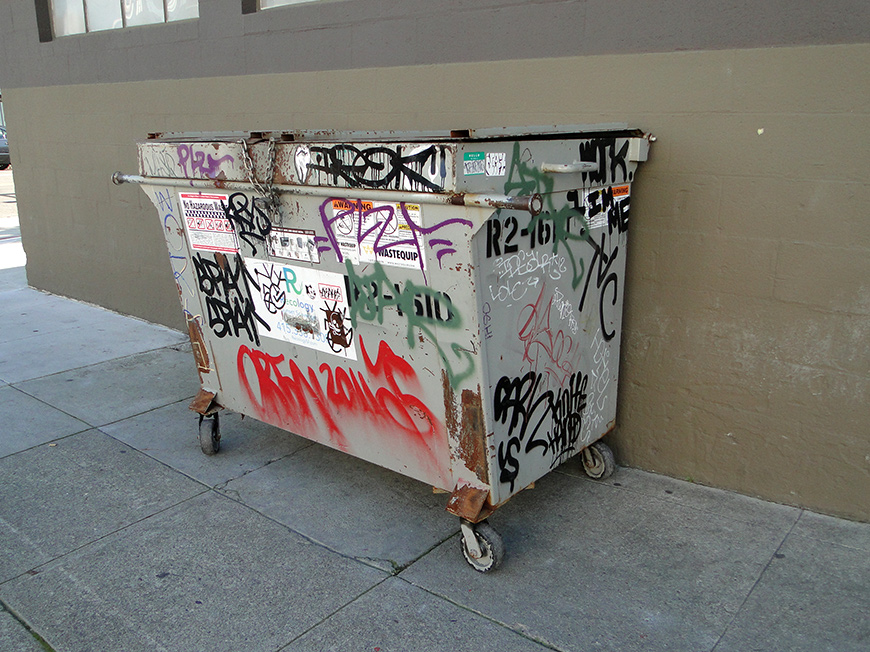
A quick look now at Twitter shows there was continued tweeting through April, 2012 with some recent activity in November stating their address had been hijacked. There has been no additional activity.
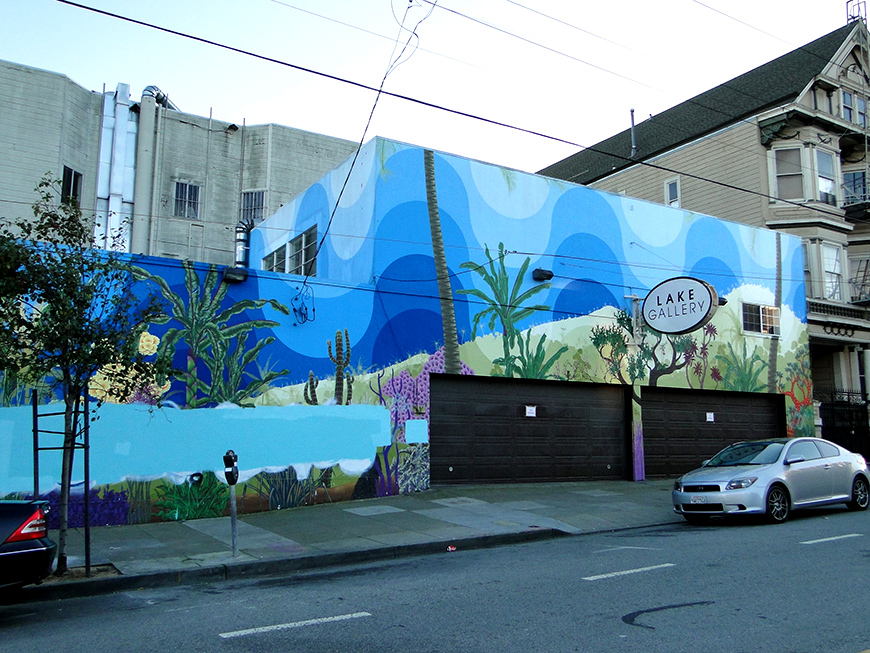
The interesting thing is that the Chronicle published an article on December 27, 2012 titled SF murals become targets for vandals by Matthai Kuruvila stating that muralist have seen increased tagging and monikers to murals throughout the city this past year, making it time consuming and expensive to restore their murals. One muralist, Jet Martinez, who has been one of the directors of the Clarion Alley Mural Project,” called 2012 the worst year for tagging of his murals since he started in 1997″. The city spends about $3.5 million a year on graffiti abatement.
So Dolores Clean’s frustration has been felt by many who are also dealing with the problem. It will be interesting if Dolores Clean comes up with a new strategy and starts up again.
Streetartsf.com takes no position in the legalities of graffiti, defining it or stating if it is good or bad or right or wrong.


 The Precita Eyes Mural Arts & Visitors Center, located in the heart of the Mission on 24th St., is hard to miss. The bright blue building with its yellow sign evokes the vibrant hues of local murals. The walls of the colorfully cluttered visitors’ center are decked out with art by Precita muralists; a larger-than-life Frida Kahlo looks down from a wall mural over the racks of postcards, books, and shelves of paint. Precita Eyes is a hub for both public art and education, and leads mural tours in the neighborhood. I chose their Sunday Classic Mural Tour as a starting off point.
 Our tour group – some locals, a recent transplant to San Francisco, and a couple of high school students on assignment – was greeted by Patricia Rose, a muralist with Precita Eyes since 1980, who intimately knows the painters and the behind-the-scenes stories of the murals. Walking through a storage area brimming with half-finished mosaics, brushes, and paint cans, we start our tour with a slideshow overview of the mural movement’s history. Although “painting on walls” has existed as a concept since prehistory, it was during the ‘Golden Age’ in 1920’s Mexico that the mural as social commentary really took off. After new paint innovations, murals started appearing outdoors and became at once more accessible to the public and more rooted in populist themes. Taking this democratization one step further, the Mujeres Muralistas shifted the focus of the murals away from the ‘masculine’ themes of struggle and war to instead celebrate life affirming themes like community, heritage and family – themes very visible in the Mission today.


 Kseniya has always loved art, but in the last few years she started paying more attention to the sort not confined to museums. She goes on urban wanderings around the Bay Area, and stops in the middle of conversations with her friends on the streets to take photos. This combines her passion for urban art and photography. An avid photographer, Kseniya shares her beautiful photographs of nature and travel on her

 Truck by
 Mural in progress by

 The wall of
 Unknown artist. 10,000 Warrior Poets photographed by
 Letter by
 Flower by
 Utility box by

 Lock by
 A fellow street art fan, Anno Sterling recently shared a link with us to a feature documentary titled “Working Class” that is about street artists Mike Giant of San Francisco and Mike Maxwell of San Diego.